

Short answer
Ocean freight is the movement of cargo between ports by ship. According to UNCTAD, more than 80 per cent of international trade in goods by volume travels by sea. It offers low cost per tonne and very high capacity, in exchange for longer transit times than air or road. Ships operate under IMO conventions — chiefly SOLAS for safety and MARPOL for pollution prevention.
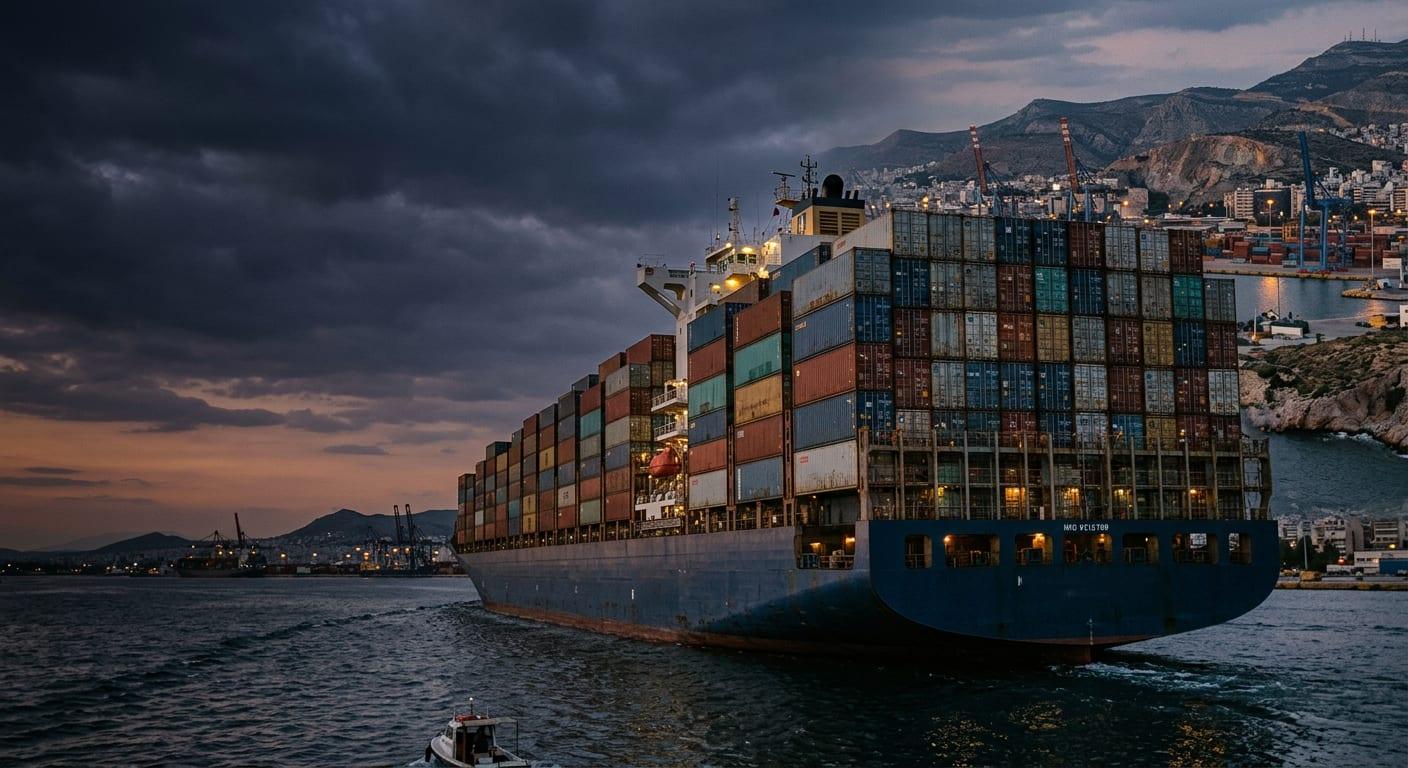
What is ocean freight?
Ocean freight is the carriage of goods between ports on container ships, bulk carriers, tankers or ro-ro vessels. Most general cargo now moves in standard 20ft and 40ft containers.
Shippers usually choose between two options: FCL (full container load), where the whole container is yours, and LCL (less than container load), where your cargo shares a container with other shippers’ goods. The right choice depends on volume, budget and delivery window.
Why it matters
UNCTAD’s Review of Maritime Transport reports that more than 80 per cent of international trade in goods by volume is carried by sea. From raw materials to finished consumer products, most global supply chains run through ports and shipping lines.
For Turkey, with ports on the Mediterranean, Aegean and Black Sea, ocean freight is the main gateway to North Africa, the Middle East, Europe and Asia.
Why shippers choose it: the advantages
Ocean freight is strongest for high-volume cargo that is not extremely time-critical:
- Usually the most economical international mode per tonne or cubic metre.
- Handles an exceptionally wide range of cargo, including heavy, oversized and project loads.
- Scheduled liner services make planning predictable.
- LCL lets small shipments benefit from container shipping too.
- Emissions per tonne-kilometre are substantially lower than air freight.
Disadvantages and limits
Good planning also means knowing its trade-offs:
- Transit times are longer than air and most road routes.
- Weather, port congestion and changes to vessel schedules can cause delays.
- Cargo still needs road or rail legs to and from the port.
- Documentation, customs and port procedures can add cost and time if they are not managed carefully.
How ocean freight is regulated
International shipping runs on shared rules covering everything from ship safety to environmental protection. Most of them are developed under the International Maritime Organization (IMO).
IMO — the International Maritime Organization
The IMO is the United Nations specialised agency responsible for the safety and security of shipping and the prevention of pollution by ships. Its founding convention was adopted in 1948 and entered into force in 1958. The IMO sets the standards; flag and port states enforce them.
SOLAS — Safety of Life at Sea
SOLAS is the most important international treaty on the safety of merchant ships. The first version was adopted in 1914 in response to the Titanic disaster; the version in force today dates from 1974 and took effect in 1980. It covers ship construction, fire protection, life-saving appliances, safety of navigation and the carriage of dangerous goods.
- A container’s verified gross mass (VGM) must be declared before it is loaded — mandatory since 1 July 2016.
- Dangerous goods are classified, packed and labelled under the IMDG Code, which is mandatory under SOLAS.
MARPOL — Prevention of Pollution from Ships
MARPOL is the main convention on preventing marine and air pollution from ships. Adopted in 1973 and applied together with its 1978 Protocol, its six annexes cover oil, noxious liquid substances, packaged harmful substances, sewage, garbage and air pollution (Annex VI).
Under Annex VI, the global limit on sulphur in ship fuel fell to 0.50 per cent on 1 January 2020. Since 1 May 2025 the Mediterranean has been an Emission Control Area with a 0.10 per cent sulphur limit — directly relevant to shipments from Turkey’s Mediterranean ports.
Sustainability
The IMO’s 2023 greenhouse-gas strategy targets net-zero emissions from international shipping by or around 2050, with indicative checkpoints of at least a 20 per cent cut by 2030 (striving for 30) and at least 70 per cent by 2040 (striving for 80), compared with 2008.
The IMO Net-Zero Framework intended to put these targets into practice was approved in April 2025, but its formal adoption has been postponed and negotiations are continuing. New fuel rules and any emissions pricing could affect freight costs in the coming years.
Where ocean logistics is heading
Shipping is heavily regulated but changing quickly. Developments worth watching:
- The shift to alternative fuels such as LNG, methanol and ammonia, and what it means for freight pricing.
- Wider use of electronic bills of lading and digital document flows.
- Real-time visibility of containers and vessels.
- Multimodal solutions combining sea, road and air for more flexible routing.
Ocean freight with Neta
Since 1998, Neta has organised ocean imports and exports from its Istanbul head office: FCL and LCL on regular weekly sailings, our own LCL services to North Africa and the Middle East, and project cargo. See our [ocean freight service](maritime) for details.
Our weekly [Tunisia groupage service](tunisia) and [LCL and FCL shipping to Djibouti](djibouti) are among the most established lanes in that network. If you would like help choosing the right option for your cargo, [send us your shipment details](quote).
Ocean shipping with Neta
Talk to our team about FCL and LCL container shipping and our Tunisia and Djibouti consolidation services.